Before the Surgery
Your pre-operation consultation will involve your doctor diagnosing your condition and explaining the recommended treatment. The procedure, goals, and risks will be explained, as well as pre-procedure rules you’ll need to follow.
At this stage, our colorectal specialist will also offer a comprehensive run-through of your condition and proposed treatment. You can ask questions or raise concerns with us at this time, and we will do our best to address each one. We will also run through the pre-surgery instructions, such as those on fasting, to ensure you understand them.
During the Surgery
Depending on the exact procedure for your case, gallbladder removal is often a day surgery done under general anaesthesia. Most cases take 60 to 90 minutes, although it may be longer if open surgery is chosen.
The main steps for the laparoscopic version are as follows:
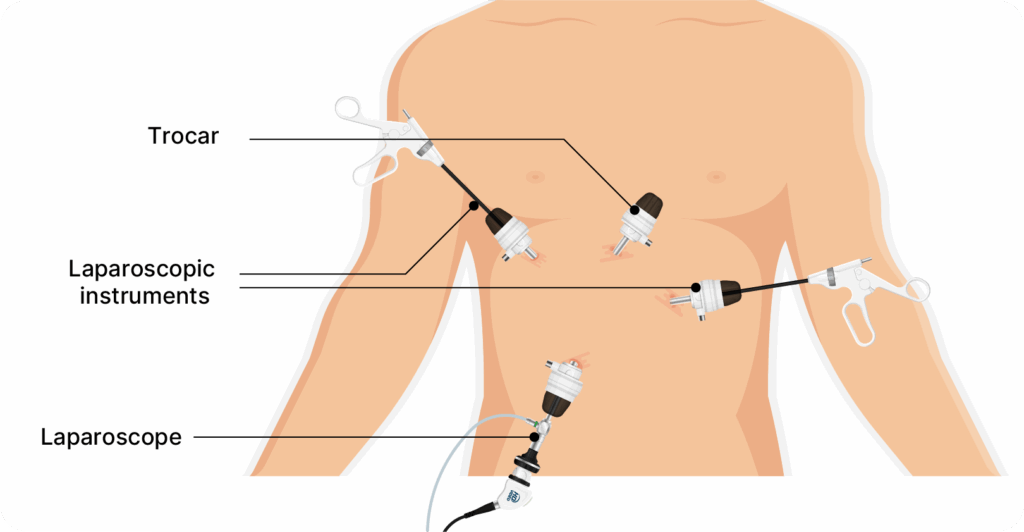
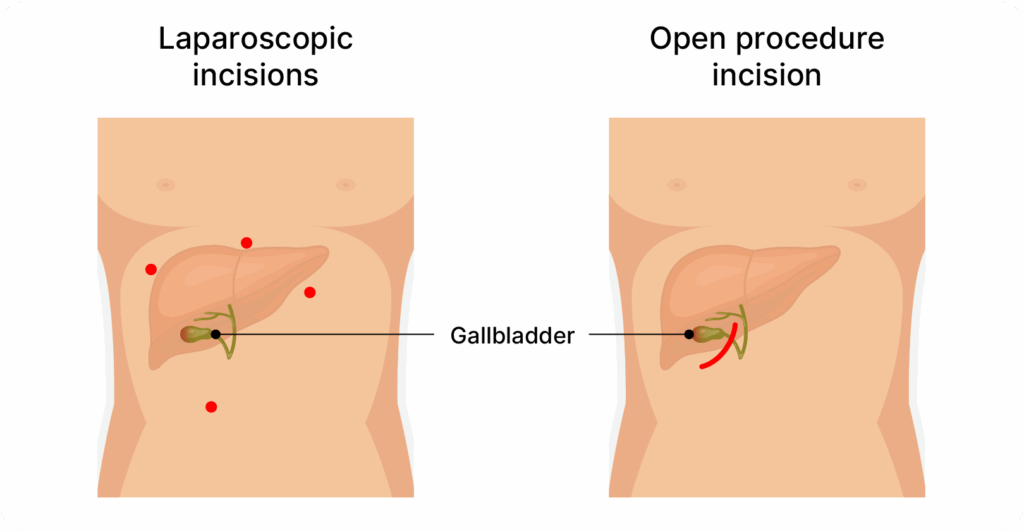
- The surgeon creates 3 to 4 small incisions in your abdomen.
- A special tube is inserted to inflate your abdominal cavity for room to work.
- A laparoscope is inserted to help the surgeon see your gallbladder.
- The gallbladder is removed using fine instruments through the incisions.
- The incisions are closed with sutures, surgical glue, or steri-strips.
After the Surgery
Most people typically receive a same-day discharge after the surgery. However, you’ll need someone to accompany you, as driving or travelling alone is not recommended after general anaesthesia. In some cases, a short hospital stay of a day or two might be required.
Recovery usually involves 1 to 2 weeks of downtime, with light activities gradually resumed after that. Strenuous activities like heavy lifting should be avoided for about 4 weeks.
Full recovery will usually take 2 to 4 weeks for laparoscopic procedures, and 6 to 8 weeks for open procedures, though this may vary by case.
Your doctor will provide post-operative instructions for wound care and schedule follow-ups to monitor your recovery.
You should also keep an eye out for certain signs or symptoms of complications. Contact your doctor if you see any of these:
- Abdominal distension (bloating)
- Bleeding or pus from an incision
- Calf pain/swelling (sign of blood clot in the leg)
- Changes in stool color (pale) or urine color (dark)
- Dizziness or fainting
- Fever or chills
- Persistent abdominal pain, nausea or vomiting
- Yellowing of the skin or eyes (jaundice)
Recovery and Prognosis for Gallbladder Removal
Since the procedure is usually done as outpatient surgery, patients can often go home on the same day for recovery. For best results, patients should follow recommended post-procedure care, which may include the following:
- Wait for 1 to 2 weeks to return to light, office-type work and/or daily activities
- Avoid heavy lifting or vigorous exercise for about 4 weeks.
- You may shower 24 to 48 hours after surgery, but avoid bathing or swimming for 1 to 2 weeks.
- Keep the surgical area dry and clean.
- Eat a low-fat, bland diet for the first week or two, as very fatty foods may trigger indigestion or diarrhoea.
- Drink more water and consider a fibre supplement or mild laxative as advised if experiencing constipation.
Most patients have no complications, no long-term side effects, and no negative impact on long-term health and quality of life after the procedure. As it permanently solves the problem of gallstones, no more gallbladder attacks or gallbladder complications are usually seen afterwards.
Risks and Side Effects of Gallbladder Removal
Gallbladder removal generally has low complication rates, especially when done laraposcopically. However, like all other surgeries, it has possible risks and side effects:
- Infection, which may be countered by antibiotics
- Short-term side effects like diarrhoea, bloating, gas discomfort, and softer stool
- Rarely, long-term sensitivity to some foods or long-term diarrhoea due to post-cholecystectomy syndrome
- Rarely, complications like abscesses, hernias at the incision site, or retained stones
- Very rarely (under 1% of cases), injury to the bile duct during surgery