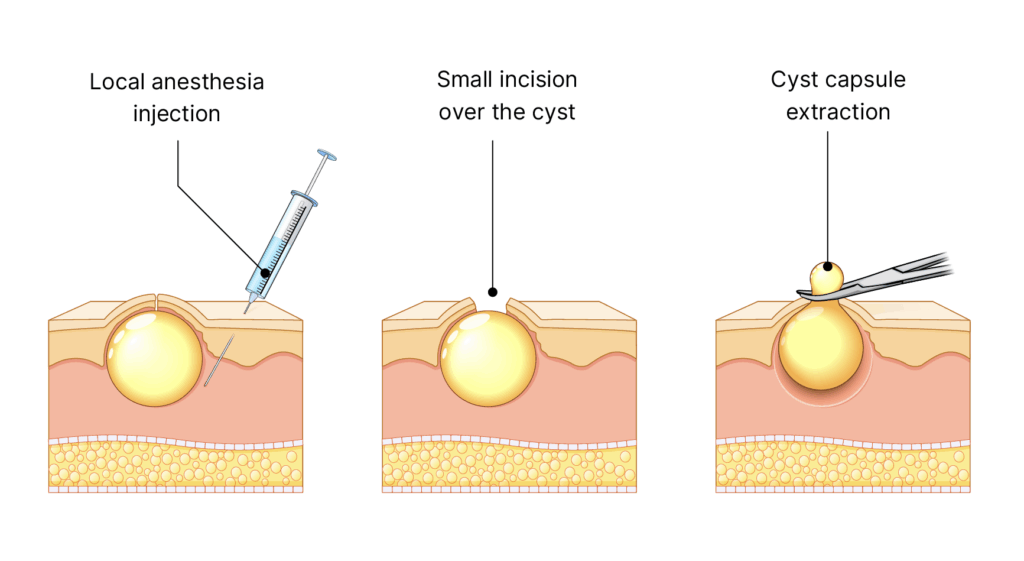
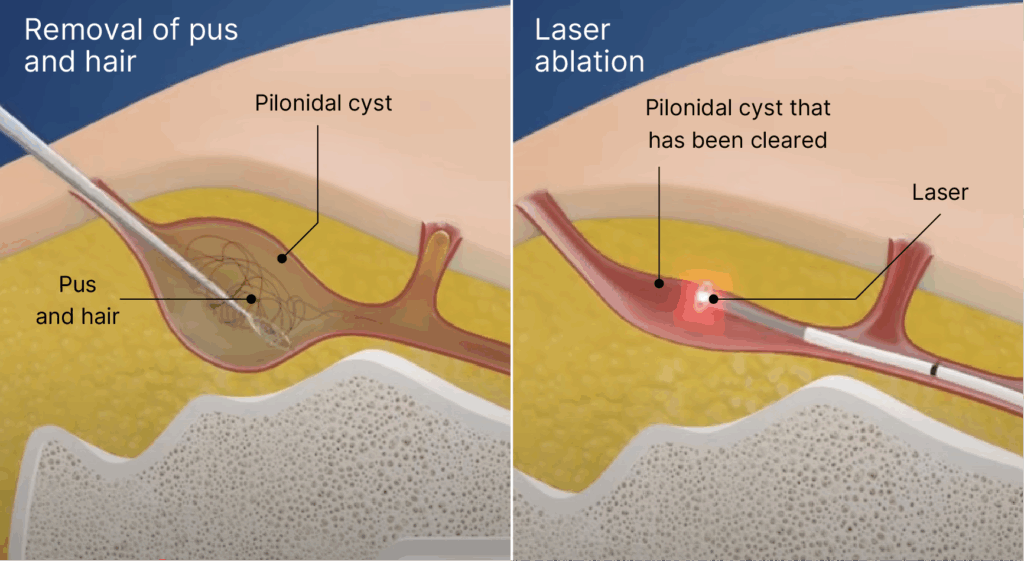
Before the Surgery
During the pre-operation consultation, our specialist will examine you to diagnose your condition and go over the recommended treatment. This will include explanations of the procedure, goals, risks, and prep and aftercare instructions.
You are encouraged to ask questions or raise concerns at this point. Our team will not only address all of your queries but also guide you through what to do before and after the procedure.
During the Surgery
Tailbone abscess removal surgery takes about an hour, and is typically an outpatient procedure. It may be done under general or local anaesthesia and the precise approach depends on the case.
These are the main steps:
- Creating an incision over the abscess
- Draining and cleaning out all pus and debris
- Excising or cutting out the cyst wall and any branching sinus tracts
- Leaving the surgical site open or closing it through stitches or flaps
After the Surgery
Most patients will be able to go home on the same day as their tailbone abscess removal surgery. Some may be required to stay a day or two longer, but this is just for more complex cases. Your doctor and care team will provide you with information on what to expect and key aftercare instructions.
Contact your doctor if you see these symptoms during the recovery period, as they may indicate a complication:
- Any sudden, large volume of bloody drainage
- Blood soaking through bandages rapidly
- Chills
- Fever
- Persistent dizziness, nausea, or vomiting
- Severe pain or swelling
Recovery and Prognosis for Piles Surgery
As this is generally an outpatient procedure, you should be able to head home on the same day as the surgery. You can return to light activities like desk work in 1 to 2 weeks, but it is advised to avoid heavy lifting or activities for around 4 weeks.
These are some common aftercare steps you may be advised to follow:
- Change your wound dressing daily if your procedure involved an open wound.
- Avoid submerging the wound in water (e.g. baths or pools) if your incision was closed with stitches.
- Take sitz baths as recommended, especially in the first 1 to 2 days post-surgery, to help with hygiene and pain relief.
- Maintain good hygiene and consider regular hair removal to reduce recurrence risk.
Most patients experience lasting relief once the abscess has been treated and the area has healed. It is advised to sustain habits that minimise recurrence risk afterwards, such as hair removal and maintaining good hygiene.
Risk and Side Effects of Piles Surgery
Tailbone abscess removal is a common procedure for treating pilonidal disease. However, it has its risks and possible side effects, like all procedures:
- Abscess recurrence, although it is simply a long-term risk of the condition itself
- Bleeding, usually light and temporary after surgery
- Hematoma or collection of blood under the skin
- Infection after surgery, the risk of which can be brought down with antibiotics
- Post-operative pain
- Infection after surgery as a risk of all procedures > a course of antibiotics will be provided after surgery to reduce risk of this
In rare cases, seroma or clear fluid buildup, which is treatable