
Understanding a Pilonidal Cyst or Abscess
What Is a Pilonidal Cyst or Abscess?
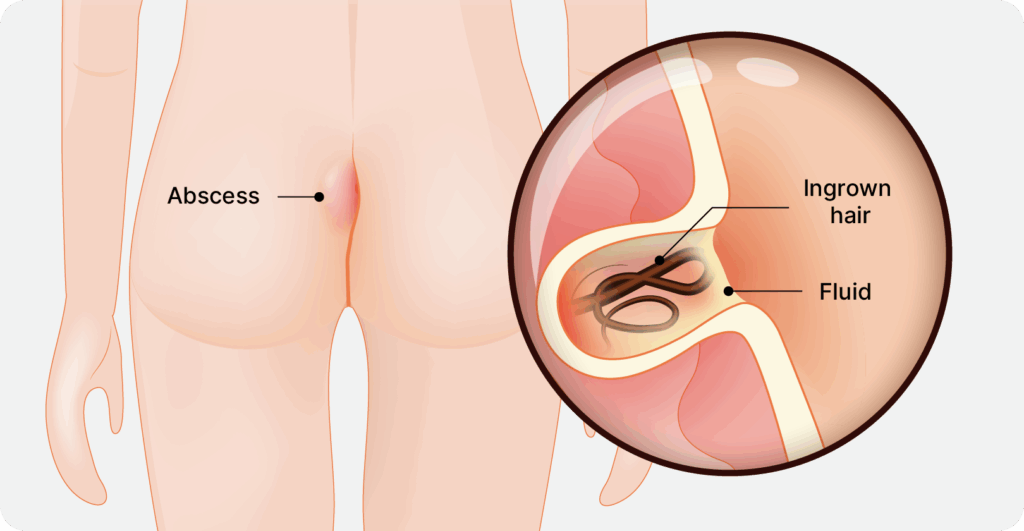
A pilonidal cyst or pilonidal sinus is an unnatural pocket or tunnel in the skin at the top of the buttock crease, typically near the tailbone. It can contain hair, skin debris, and fluid.
This cyst can cause pain when sitting or when pressure is applied. Left untreated, it can turn into a pilonidal abscess, which is an infected and pus-filled cyst.
Causes and Risk Factors of a Pilonidal Cyst or Abscess
Pilonidal cysts are formed when hair or skin debris punctures and irritates the skin in the area. The body creates a cyst around the irritant, and if this cyst develops into an infection, it turns into a pilonidal abscess.
Here are other causes of pilonidal cyst formation:
- Tight or non-breathable clothing rubbing the skin and forcing hairs inward
- Inflamed pimples near anus, as these can turn into cysts
- A sedentary lifestyle or prolonged sitting, which causes pressure and friction on the tailbone
There are also several risk factors associated with a higher chance of pilonidal cyst development:
- Being male, as it’s 3 to 4 times for likely for men than women
- Being in your teens to your thirties
- Obesity, as a higher body mass increases pressure on the skin
- Having coarse or thick body hair in the area
- Having a genetic predisposition to forming these cysts
Signs and Symptoms of a Pilonidal Cyst or Abscess
A pilonidal cyst starts as a small bump found near the top of the buttock crease, not right at the anus. This is usually the most common warning sign of the cyst, although you can look out for these as well:
- Pain or tenderness in the tailbone or lower back, whether seated or standing
- A palpably swollen part of the area that may be red, warm, or sore to the touch
- The discharge of pus or blood near the tailbone
- A foul odour from pus draining from the cyst
Other symptoms might accompany these if the cyst has become an abscess and has grown large or severely infected:
- Chills
- Fever
- Nausea
- General malaise
- Extreme tiredness (fatigue)
Book an Appointment for a Medical Assessment
If you suspect you have a pilonidal cyst or abscess, schedule an appointment for proper medical assessment and diagnosis by a colorectal surgeon.
How a Pilonidal Cyst or Abscess Is Diagnosed
Your doctor will usually begin your clinical evaluation with a request for your medical history. You may also be asked questions such as:
- If you feel any pain and where
- When the pain began, and if it worsens during certain activities
- If there has been any change in the appearance of the lump or area
- If there is discharge from the lump and how to describe it
- How long the lump has been present or noticeable in the area
The doctor may also perform both visual and physical examinations of the lump. The latter will involve touching it to try and identify possible cysts, swelling, or pilonidal sinus openings.
If the cyst is large or deep sinus tracts are a concern, the doctor may also request additional imaging. Possible scans include ultrasound, CT scans, or MRI.
Potential Complications and Related Conditions of a Pilonidal Cyst or Abscess
Some complications may arise from untreated pilonidal cysts and abscesses. These include the spread of infection from an inflamed cyst and fistulas.
- Recurring infections: Repeated bouts of pain, swelling, and discharge are possible if your pilonidal cyst is prone to infection. This may require repeated drainage and antibiotic treatment.
- Deep abscess or fistula: An infected pilonidal cyst can spread its infection under the skin. This can form larger abscesses that create tunnels in the tissues, known as fistulas, and even extend towards the tailbone.
- Spread of infection: Some infections from pilonidal cysts can spread throughout the body and even the blood. This can be a life-threatening condition.
- Squamous cell carcinoma: This is a rare complication of the condition. It tends to be more often associated with chronically inflamed or infected pilonidal cysts.
- Recurrent cysts: Pilonidal cysts can also recur even after treatment. This may not be the exact same cyst as before, but it is often in the same area.
Treatment of a Pilonidal Cyst or Abscess
Various treatment options are available for a pilonidal cyst or abscess, depending on the condition’s severity, chronicity, and other patient factors. A doctor’s assessment is needed to determine the best option.
Non-surgical Treatments for Mild Infections
- Incision and Drainage (I&D): An incision is made in the skin over the cyst to safely drain the fluid and debris inside. Unfortunately, it cannot prevent recurrence of the cyst.
- Antibiotics: This is prescribed when the cyst is already infected and has turned into an abscess. It attacks the bacteria causing the infection, but cannot achieve drainage of the cyst by itself and must be paired with other treatments for that.
- Phenol Injections: Phenol is injected into the pilonidal sinus after cleaning, prompting it to heal. However, this may irritate some people or require multiple injections for results.
- Laser Hair Removal: This is less of a treatment for pilonidal cysts than a measure taken to reduce the odds of their recurrence. It tends to be most effective in cases where the cysts are caused by ingrown hair.
- At-home care (over-the-counter pain relief and warm sitz baths): These are again less for actual treatment of the cyst than its symptoms. OTC pain medication helps with discomfort while sitz baths promote healing after treatment.
Surgical Treatments for Severe Infections, Abscesses and Fistulas
When a pilonidal cyst is chronic or is severely infected (an abscess), surgery is often the solution. The cyst or abscess should be cut out and the wound left open to heal.
If left open, it will require regular dressing. However, it can also be closed with stitches of flaps of skin taken from other parts of your body. Typical aftercare includes the following steps:
- Keeping the area clean and dry
- Shaving hair in the area regularly
- Seeking your surgeon’s specific advice on wound care, pain management, and signs of complications
Recovery and Prognosis for Pilonidal Cysts or Abscesses
Pilonidal cysts can be chronic or recurrent even after surgery. This is more likely if you have a family history of the problem.
While the cyst is not fatal in itself, it can pose long-term health issues like body-wide infections and squamous cell carcinoma risks from cysts that have turned into abscesses. This is why it’s vital to seek a consultation with a doctor for early detection and treatment.
Prevention and Management Tips for Pilonidal Cysts or Abscesses
While this condition may not be entirely preventable, the risk of developing a pilonidal cyst or abscess can be lowered. Here are some tips that may help:
- Practise good hygiene by keeping the buttock area dry and clean to prevent infection.
- Keep the area free of hair by shaving hair before it can prick the skin.
- Keep your weight healthy to reduce pressure on the tailbone region.
- Avoid prolonged sitting to avoid placing pressure on the area.
- Wear breathable, non-irritating clothing.
Book an Appointment with Our Specialists
Consult our colorectal specialist for accurate diagnosis and appropriate treatment if you think you have a pilonidal cyst or abscess. We can provide an early evaluation, especially if symptoms are persistent or recurrent.