Before the Surgery
During your pre-op consultation, our colorectal specialist will examine you before recommending a treatment plan for your condition. This will include explanations of the procedure, goals, risks, and prep and aftercare instructions, as well as pre-procedure rules you’ll need to follow before the surgery, such as fasting or medication.
At this stage, you can ask questions or raise concerns with us during this consultation, and we will do our best to address each one. Our team will also run through all of the pre-surgery and post-surgery instructions with you.
During the Surgery
Piles surgery can be performed under either local or general anaesthesia, depending on the severity and type of haemorrhoids. Most excisional procedures are done under general anaesthesia. While some complex cases may require a short hospital stay of 1 to 2 days, the majority of patients are discharged on the same day.
The general procedure often takes an hour and is as follows:
- Finding the haemorrhoids
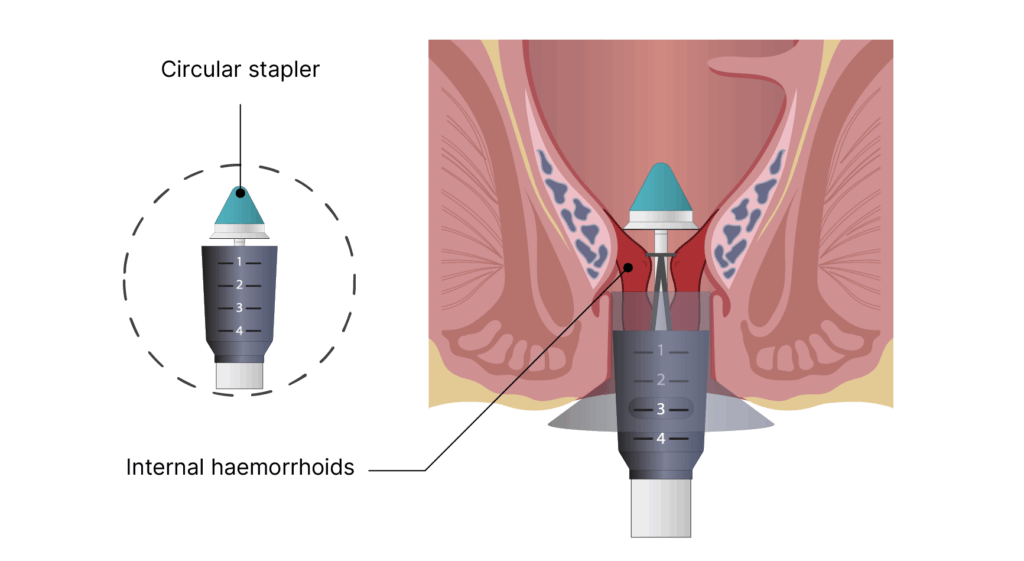
- Excising or cutting out the haemorrhoidal tissue
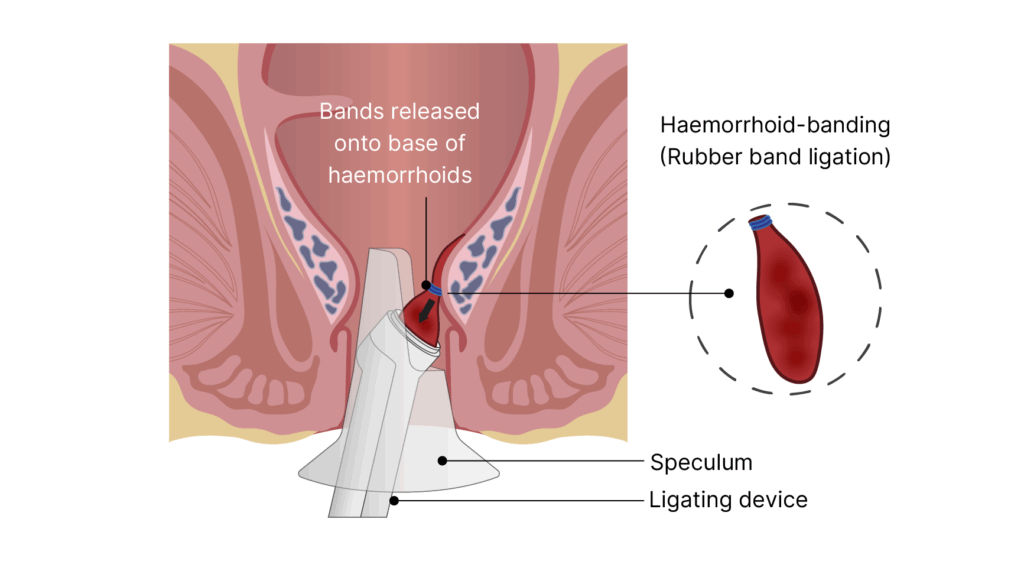
- Tying off or sealing the blood vessels to the haemorrhoid
- Leaving the surgical site open or suturing it closed
After the Surgery
Piles removal surgery is often an outpatient procedure, but some patients may be asked to stay up to 2 days in the hospital after it. Your doctor will provide aftercare instructions as well as schedule follow-up appointments to keep an eye on your progress.
If you experience any of the following, however, you should contact your doctor immediately.
- Chills
- Difficulty urinating
- Excessive or sustained bleeding through your bandages
- Fever (temperature above 38°C)
- Inability to pass gas/stool
- Persistent nausea/vomiting or dizziness
- Severe abdominal swelling
- Severe pain not controlled by medication
Recovery and Prognosis for Piles Surgery
Since piles surgery is usually done as a day procedure, most patients can go home on the same day. If you were under general anaesthesia for the surgery, you should not drive home after the procedure and ideally have someone accompany you for safety reasons.
Post-procedure care improves outcomes and can shorten recovery timelines, but the usual timeline involves downtime of 1-2 weeks. After that, patients can often return to light activities, but should hold off on strenuous exercise for around 4 weeks. Full recovery is typically achieved in 4-6 weeks.
These are some common aftercare steps you may be advised to follow:
- Keep the area clean and dry, avoid rubbing
- Take warm sitz baths to keep the area clean after a bowel movement.
- Take prebiotics or fibre supplements with ample water to keep your stools soft.
- Avoid prolonged sitting on the toilet or holding in stools
Most patients experience long-term or permanent relief of symptoms. Surgical treatments provide symptom relief, faster recovery and a lowered chance of recurrence as compared to conservative, non-surgical treatment methods.
Risk and Side Effects of Piles Surgery
While piles surgery is a common procedure for haemorrhoid treatment, it has its risks and possible side effects, like all other surgeries:
- Infection after surgery, which can be mitigated with antibiotics
- Short-term post-operative pain, light bleeding, or trouble urinating
- Haemorrhoid recurrence (or growth of new haemorrhoids)
- In rare cases, anal incontinence and anal stenosis